-
Benign Neglect
An Accidental Experiment in Extended Maceration
By Alex Garner
A few months ago, at one of our Merri Mashers meetings, Michael H showed us one of the best ciders I’ve tasted by any club member. We all asked him what his secret was and his answer was wonderfully simple: “I left it in the fermenter for eighteen months because I wasn’t happy with it… until I was.” Coming from the same person who’s also managed to make outstanding sake, it reinforced an idea that seems to crop up in a lot of traditional fermentation – that good things often happen slowly, and sometimes the best thing you can do is nothing at all.
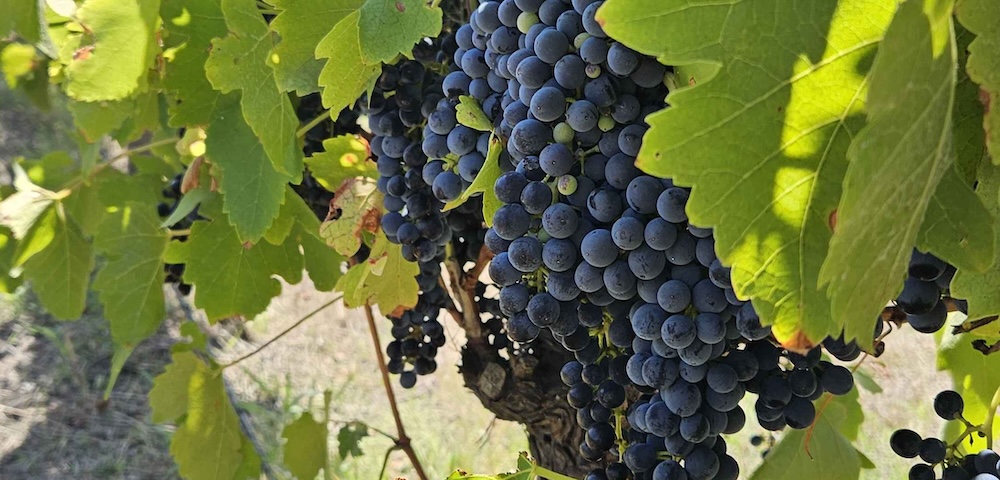
Each autumn, The Merri Mashers runs one of my favourite events of the year: our annual wine vintage. We place a bulk order of grapes from our partner vineyard, spend a day picking, crushing and pressing together, then everyone heads home with one or more buckets of freshly crushed grapes (or must) to ferment into their own wine. From that point on, every winemaker takes a slightly different path, and it’s always fascinating to see how the wines compare a year later.
As it turns out, I was about to conduct my own accidental experiment in patience.
This year’s Heathcote Shiraz was supposed to be a fairly routine red wine. Ferment it, press it after a week or so, then move it into storage. Instead, life happened. Even the Merri Mashers committee work somehow managed to fill some of my spare evenings after work. It’s so much easier to walk over to the home office and sit at the computer than it is to go to the garage and wrestle with a wine press. By this point every other Masher had pressed weeks or months earlier, and I was potentially sitting on a must time bomb. Then chickenpox decided to make an appearance and put everything on hold for several more weeks.
By the time I finally walked into the cellar to press the wine today, it had been sitting quietly on its skins for over three months. At this point I found out just how forgiving Shiraz can be and what happens when you leave your wine on skins for that amount of time.
If you’re a winemaker, or even if you know the very basics about wine making, you’re probably already thinking, “Well… that’s ruined.” That’s certainly what I thought. Instead, I think I’ve accidentally made the best red wine I’ve ever produced.
Vintage 2026
This year’s fruit was around 50 kg of Heathcote Shiraz. After crushing, I split the must evenly between three identical buckets. The only variable was the yeast. One received Vintage Red cultured yeast, another a Red Fruit cultured yeast and the third was left as a wild ferment. Each received identical tartaric additions, appropriate nutrients, and (apart from the wild ferment) sulfite at crush. The original plan was to ferment, press after a week or so, and continue as normal. Life had other ideas.
Three months later the buckets had sat untouched in my cellar, and I think this is the first happy accident of my process. We’re talking a constant 16°C, complete darkness, loosely fitted lids, no movement, and no temperature swings.
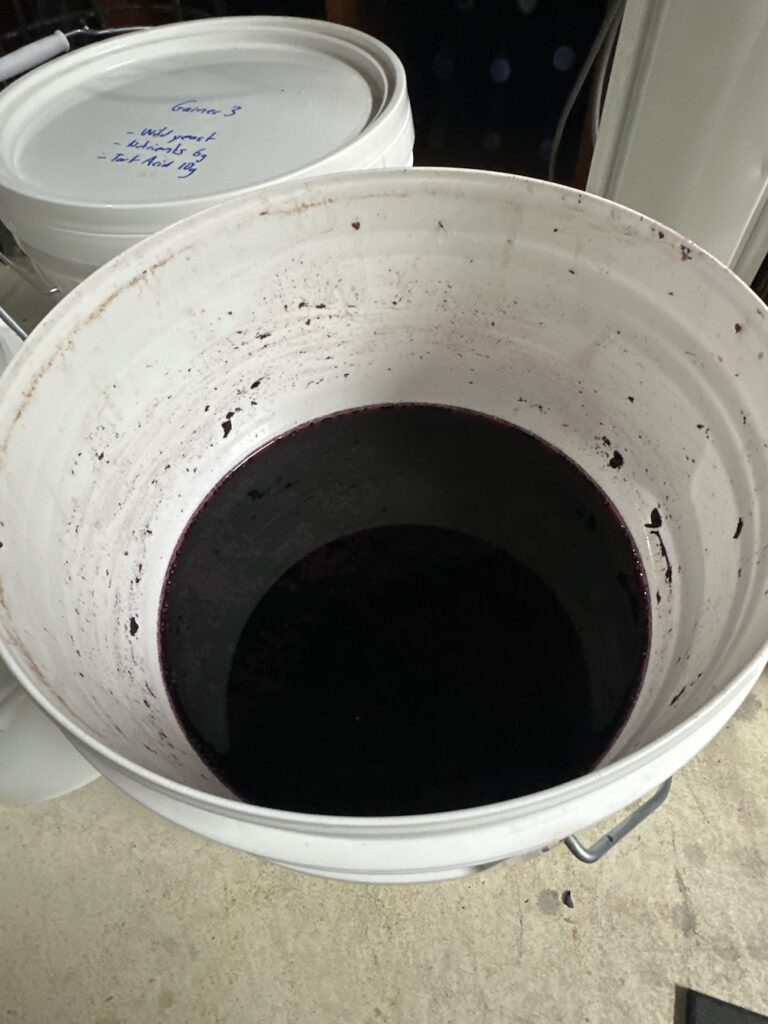
I was honestly expecting oxidation, volatile acidity, possible Brettanomyces, or simply an over-extracted tannin bomb. Instead every ferment opened perfectly clean with no pellicle, no mould, no vinegar and not even a tiny whiff of oxidation. So my mood went straight from “damage control” to genuine curiosity.
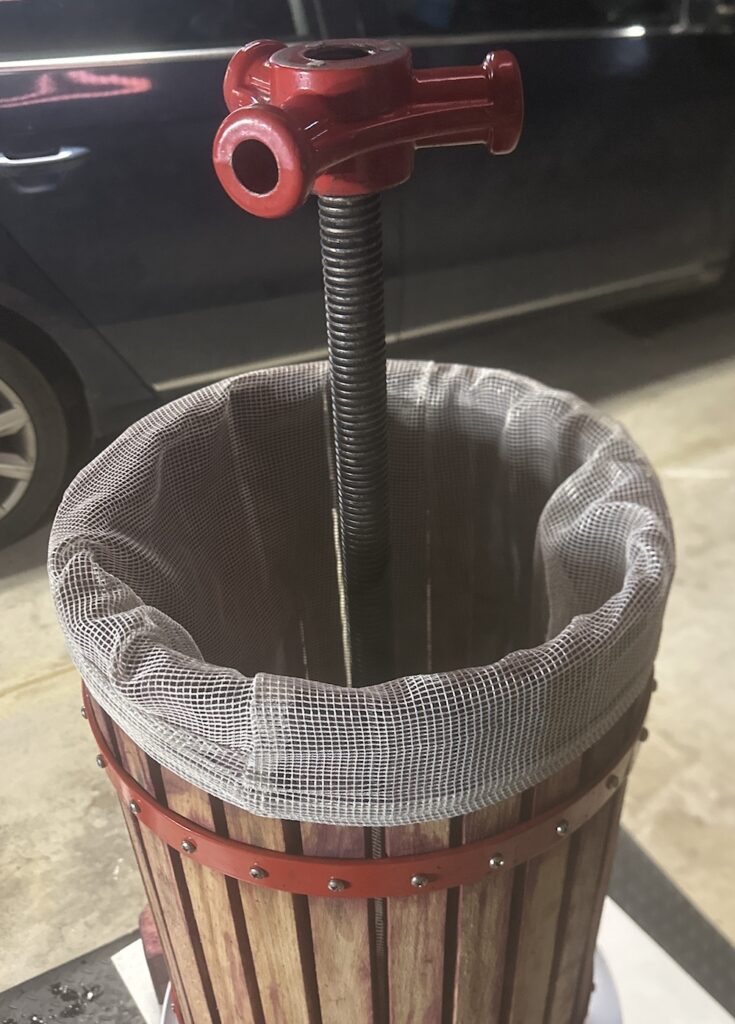
The main sign that disaster was not impending came when I saw that there wasn’t really a floating cap anymore and everything had settled. The skins had compacted beneath the wine, so the first litres were essentially free-run wine sitting above the settled pomace. Even more surprising was the fact that each press fraction remained beautifully soft. Normally, as you chase the last few litres through the press, tannins begin becoming harsher and seed character starts appearing, but that simply didn’t happen and the later pressings remained remarkably balanced.
Pressing each ferment separately turned out to be the best decision of the day. The vintage red yeast wine was fruit-driven with forest fruits, plum and blackberry and a subtle floral lift and a gentle savoury edge. It was elegant, approachable and beautifully fruit-driven.
The red fruit yeast turned out to be the smoothest and roundest of the three with blueberry as the dominant fruit character and a slightly higher acidity giving it excellent backbone. To be honest, this wine was already dangerously drinkable and this is before any oak.
The wild ferment was, like last year, a surprise and it produced the most complex wine. Floral aromatics layered over blackberry and blueberry with earthy, savoury notes that reminded me of autumn leaves. Interestingly, it was also the only bucket where many of the berries remained recognisably intact at the bottom of the bucket. The other two had largely broken down into skins and seeds. Most impressive of all was the balance because the tannins, acidity and fruit already felt completely integrated and, as with the other two buckets, there wasn’t a single detectable fault.
The Blend
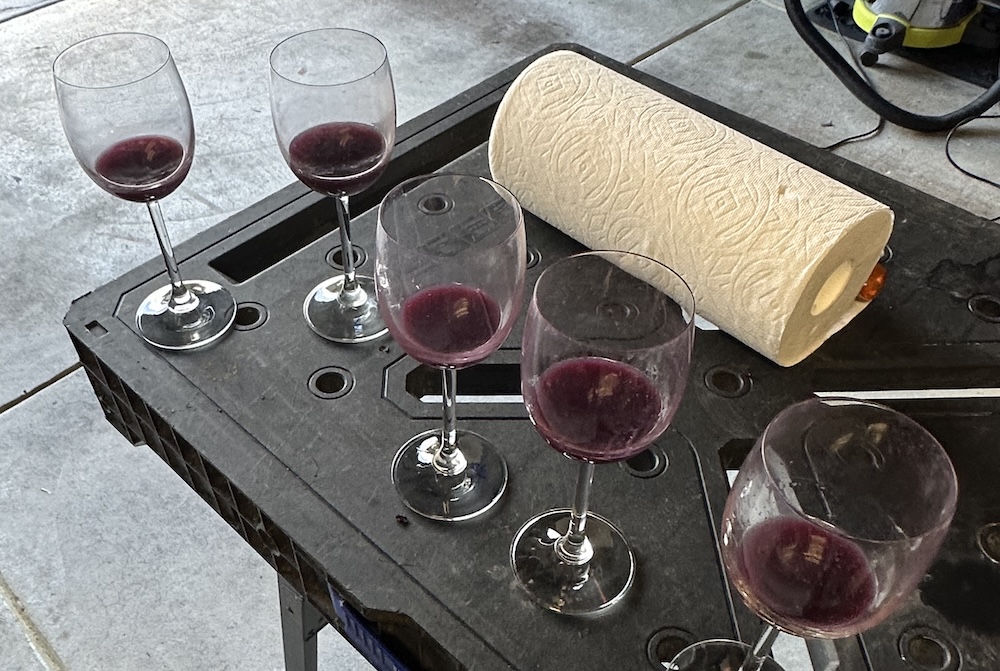
Initially I wondered whether I should bottle the three wines separately but after tasting them side-by-side it became obvious that each one contributed something unique. The Vintage Red brought freshness and lifted fruit but with good structural tannin, the Red Fruit yeast added polish and generosity, and the wild yeast supplied complexity and savoury depth. An equal blend was clearly going to be greater than the sum of its parts.
So that’s what I did and that blend produces a silky smooth mouthfeel, broadened fruit, and another level of complexity on the finish. I now think that sometimes blending isn’t about fixing weaker wines, it’s about allowing good wines to complement one another.
So, should everyone leave Shiraz on skins for three months? Absolutely not! I think the conditions were the real saviour here. Starting with healthy fruit is a given, and you need to have access to a cool cellar with complete darkness and no daily, weekly or seasonal temperature change. I think if this was in a standard Aussie garage this story could have ended very differently. Having mostly sealed buckets retaining a blanket of CO₂ probably didn’t hurt the equation. Those conditions almost certainly protected the wine while extended skin contact allowed the tannins to soften and integrate.
The biggest lesson wasn’t about extended maceration and it wasn’t even about wild fermentation. It was about intervention.
Standing there tasting the final blend, my first instinct was to ask: “What should I add?” Oak? More acid? Tannin? After spending the afternoon tasting and blending, the answer became obvious. Add almost nothing.
When I get the chance to talk to my winemaking heroes like Hiroyuki Kusuda from Kusuda Wines in Martinborough and Phillip Moraghan from Curly Flat in the Macedon Ranges, they always say that you make the wine on the vine and your job as a winemaker is to intervene as little as possible. I’ve certainly (accidentally) taken that to heart this year and if you add Michael’s “Patience Principle” to that philosophy I seem to have stumbled into one of my best vintages.
Sometimes the hardest thing a winemaker can do is leave a good wine alone.
Where to From Here?
The wine is now sitting, fully blended, under airlock in a fermenter in the cellar while everything settles before the first racking. From there I’ll make careful decisions about sulfite and whether it needs even the lightest touch of oak. At this point the goal isn’t to improve the wine, it’s simply to avoid getting in its way.
Every vintage teaches you something. This one taught me that good fruit, careful process and a little patience can sometimes achieve more than another additive or another intervention. The wine was made on the vine and everything after that was simply trying not to spoil it.
It also reminds me why I enjoy being part of Merri Mashers so much. Michael’s cider presentation wasn’t about wine at all, but it completely changed the way I looked at this vintage. That’s what makes a club like ours special. You come for the beer, but you end up learning about wine, cider, mead, sake and a dozen other fermented things from people who are genuinely happy to share what they’ve discovered. If you’re reading this and wondering whether to join, this annual wine project is just one example of the kinds of experiences and conversations that make the club such a rewarding place to be.
Looking back, I’d like to think patience helped build this wine. The cool cellar probably helped too. And, strangely enough, so did a bout of chickenpox that kept me upstairs for several weeks. That said, if you’re looking to replicate this experiment, I’d strongly recommend the patience and skip the chickenpox. Trust me on that one.
-
Backyard Homebrew Co. – Member Discount & Inner North Deliveries

Many of Melbourne’s larger homebrew stores are a bit of a trek for our members. That usually means planning a dedicated trip or paying for shipping regularly, which adds up over time and isn’t always ideal for ingredients like yeast and hops.
To help with this, Backyard Homebrew Co. will be trialling free delivery to Melbourne’s inner northern suburbs for Merri Mashers members.
The idea is simple: a central drop off point where orders can be delivered once per fortnight at no cost. You’ll still need to collect your order, but it should be a much shorter and easier trip.
In addition, Backyard Homebrew Co. are offering members a 10% discount on all purchases (excluding Braumeisters), regardless of delivery method.
How It Works
- Place your order as normal via the Backyard Homebrew website
- Enter MM10 in the coupon code field and click Apply
- Select Local Pickup as the shipping method, then click Process to Checkout
- Enter your details and add “MM Drop” in the order notes
- Finalise your order as usual
If you don’t add “MM Drop” in the order notes, your order won’t be included in the delivery and you’ll need to make alternative arrangements with the store.
Orders will be delivered to the drop-off point (currently Brian’s place in West Preston). You’ll then be contacted to arrange collection over the following few days and provided with the collection address.Trial Period Drop-Off Dates
• Before Saturday 11 April
• Before Saturday 25 April
• Before Saturday 9 May
• Before Saturday 23 MayThis is a trial to see how it works for everyone. If you think it’s a good idea, please support it by using the service.
-
YVB Belgian Beerfest 2026

The competitions keep coming this year, and the latest to launch is the Yarra Valley Brewers’ annual Belgian Beerfest.There are a few exciting changes for this comp in 2026. First, the Yarra Valley Brewers have launched a new website and competition portal, making it much easier to find information and pay for your entries. Second, judging will be held at Hard Road Brewing in Bayswater. While it’s still a bit of a hike for many of us, it’s far more accessible than in previous years.
I (Brian) have already registered my interest in judging or stewarding at the event, so let me know if you sign up and we can coordinate transport.
Entries must be submitted, paid for, and dropped off by Saturday 9 May. Judging will take place on Sunday 17 May.
For more information, to enter, or to volunteer, head to the Yarra Valley Brewers website. It would be great to see a strong showing of Mashers supporting this event!